Fire can spread quickly through a workplace. A few minutes can make a major difference to the safety of employees, customers, and visitors. For a business, fire safety is not only about protecting people. It is also a way of safeguarding inventory, machinery, buildings, and operations. A good commercial fire alarm system gives a warning signal in case of smoke or a fire outbreak. It gives you time to act. The best fire safety systems for your business will be determined by different factors such as the size, design, use, and risks of the building.
What Does a Commercial Fire Alarm System Do?
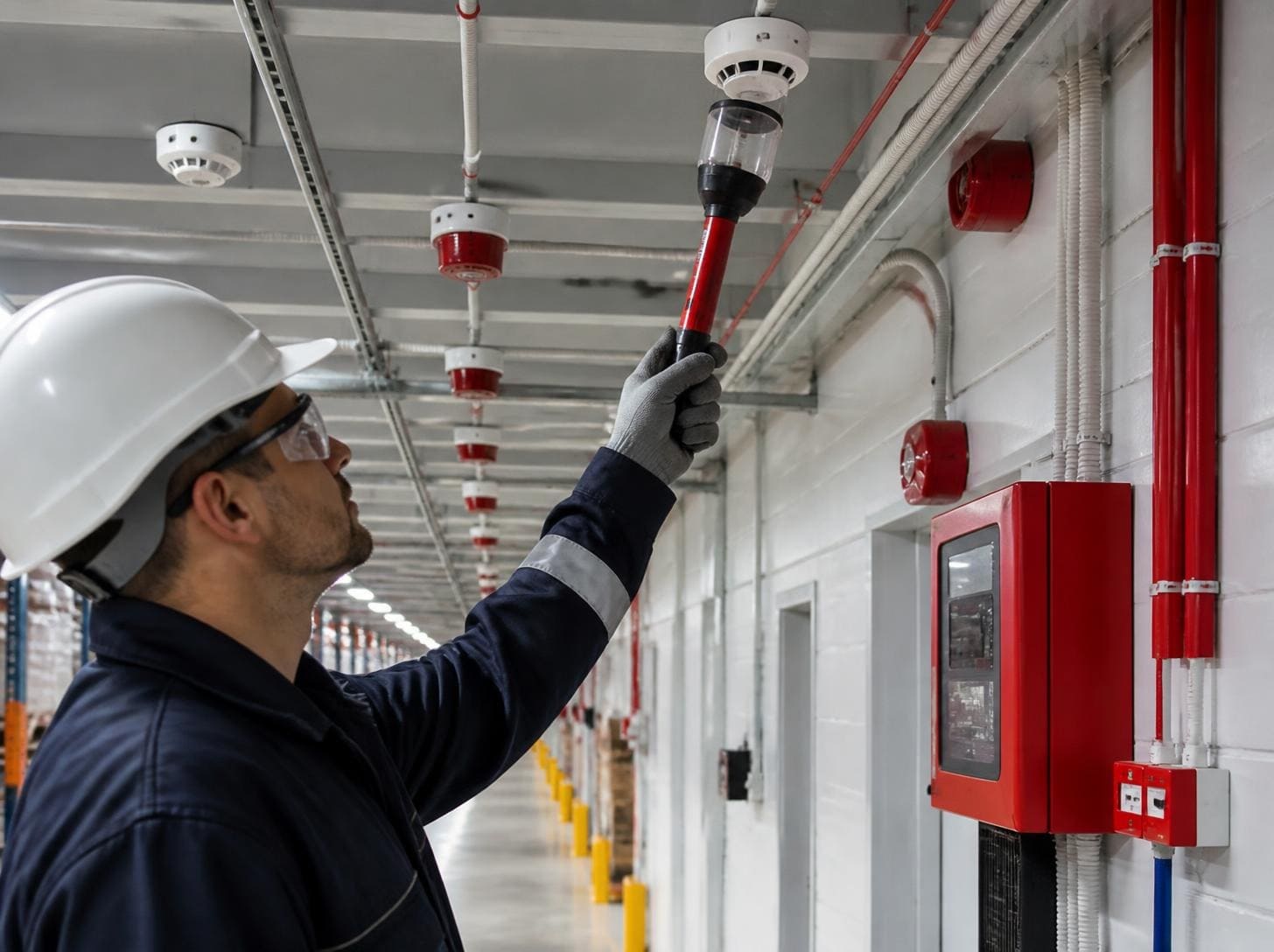
A commercial alarm system is designed to identify the presence of fire inside a building. Depending on the premises, a system may include:
- Smoke detectors
- Heat detectors
- Manual call points
- Alarm sounders
- Visual alarm devices
- A central control and indicating panel
- Connections to other building safety equipment
Some systems can also interact with other building functions. For example, an alarm may trigger the release of electronic doors, operate smoke control equipment, or affect lift operation. These connected functions need to be checked as part of ongoing testing and fire alarm system maintenance. The purpose is simple: to identify a fire at an early stage and give a proper warning so that action can be taken accordingly.
Why Do Businesses Need Fire Detection?
Here are some reasons why businesses should use fire detection systems:
- People protection: Early detection gives people enough time to get out.
- Avoiding damage: Early detection could lead to taking necessary actions before a fire spreads further.
- Protection of business property: Stock, machinery, computers, and equipment could cost a lot of money.
- Continuity of business: A serious fire could stop business operations for a few days or even weeks.
- Meeting fire safety duties: Businesses must identify risks and put suitable precautions in place.
A very small, open-plan premises may have different needs from a multi-storey office, warehouse, care facility, or retail building. Government guidance makes clear that the risk assessment should determine what is appropriate rather than assuming that one solution suits every premises.
Choosing the Right System for Your Premises
The right alarm is not simply the one with the most devices. It should match the building and the risks inside it. A professional survey involves an examination of:
- Size of the building
- Number of storeys and rooms in the building
- Occupancy levels
- Unoccupied areas
- Heat or ignition sources
- Storage areas
- Escape routes
- Individuals requiring additional time to evacuate
- Fire safety equipment installed
- Systems requiring interface with the alarm system
For non-domestic premises, BS 5839-1:2025 is the current British Standard code of practice covering the design, installation, commissioning, and maintenance of fire detection and alarm systems. It came into effect on 30 April 2025 and replaced the 2017 edition.
Why Professional Fire Alarm Installation Matters
A good system can only perform properly when it is correctly designed and installed. Professional fire alarm installation involves more than fixing detectors to ceilings. Planning must take into account the structure and the purpose for which the system is designed. It must be ensured that the following are properly considered:
- Detector locations
- Manual call point positions
- Alarm audibility
- Visibility of the alarm when necessary
- Routing and protection of cabling
- Location of the control panel
- Power supply
- System interfaces
- Testing and commissioning
- Information for handover
The current BS 5839-1:2025 standard gives guidance related to these aspects. This makes professional fire alarm systems installation an important buying decision.
Fire Alarm Systems Installation: What Should You Expect?
When comparing providers, it is important to ask what is included in the fire alarm system installation. A professional installation process will generally include multiple steps:
- Assessment: Assessment of the location and the risks of fire there.
- System design: The required detection and warning arrangements are planned.
- Installation: Equipment, wiring, and control equipment are installed.
- Testing: Components and system functions are tested.
- Commissioning: The system is inspected to ensure that it functions correctly.
- Handover: Necessary information and documentation are supplied.
- Maintenance: Fire alarm system maintenance is carried out on the installed system.
Fire Safety Systems Require Regular Attention
A system could become less effective if detectors are not working or building renovations affect detector coverage. That is why fire safety systems need to be treated as an ongoing responsibility rather than simply a one-time purchase.
Businesses should:
- Carry out regular checks as appropriate for the system
- Arrange professional servicing
- Keep records of testing and faults
- Investigate recurring false alarms
- Report and repair faults promptly
- Review the system after major changes to the building
- Make sure staff understand what to do when the alarm operates
Government guidance states that fire alarm systems should be regularly tested and maintained. If your business changes its layout, use, or occupancy, the fire risk assessment should also be reviewed. This helps confirm that existing protection remains suitable.
How Often Should a Business Fire Alarm Be Maintained?
There is no single maintenance schedule that applies identically to every commercial building. The required arrangements depend on the type of system, premises, and risk. The relevant standard, system design, and fire safety arrangements should be considered.
Fire alarm system maintenance can include inspection, functional testing, and checking components. It also gives businesses documented evidence that their system is being looked after. If a system shows repeated faults or false alarms, these should not simply be ignored. The cause should be investigated and suitable corrective action taken.
What Should Businesses Look for in a Fire Protection Provider?
Price is important, but it should not be the only consideration. When choosing a commercial fire protection company, ask:
- Does the provider understand your type of premises?
- Will the system be designed around your actual risks?
- What standards and guidance will be followed?
- Is commissioning included?
- Will you receive the necessary documentation?
- Is ongoing servicing available?
- How are faults handled?
Final Thoughts
Precautions for fire should be taken before an emergency situation arises. A proper commercial fire alarm system with professional installation and maintenance can form a significant part of a company’s fire precautions. The important thing is to consider the premises when making a decision rather than choosing the least expensive option.
For companies seeking professional assistance, Griol Fire Protection offers fire protection services designed to help businesses manage their fire safety requirements. From requirement assessment through installation and protection, the right professional support can help maintain a safe and reliable working environment.
Frequently Asked Questions
1. Does every business legally need a fire alarm?
Not necessarily the same type of alarm. Fire safety requirements depend on the premises and the findings of the fire risk assessment. Government guidance notes that some very small, simple premises may have different arrangements, while most premises covered by the Fire Safety Order will need an electrical fire alarm system.
2. How much does a commercial fire alarm cost?
There is no set price. It depends on the size of the building, the number of systems required, and the type of system. Required wiring, access, interfaces, and installation factors also matter. The most accurate way to determine the cost is to have the property assessed and a specification prepared.
3. How often should a commercial fire alarm be serviced?
Frequency will depend on the system and premises. Businesses should ensure that their maintenance arrangements meet the standards and fire safety requirements relevant to their system and premises.
4. Does a new system need to follow BS 5839-1:2025?
BS 5839-1:2025 is the current code of practice for the design, installation, commissioning, and maintenance of fire detection and fire alarm systems within non-domestic buildings. However, the code does not by itself determine which buildings require an alarm system.
5. Can an existing fire alarm system be upgraded?
In many instances, an existing system can be improved or enhanced. The most effective solution will depend on the age, condition, type, and extent of improvements required. This should be determined through an assessment by a suitably qualified professional.