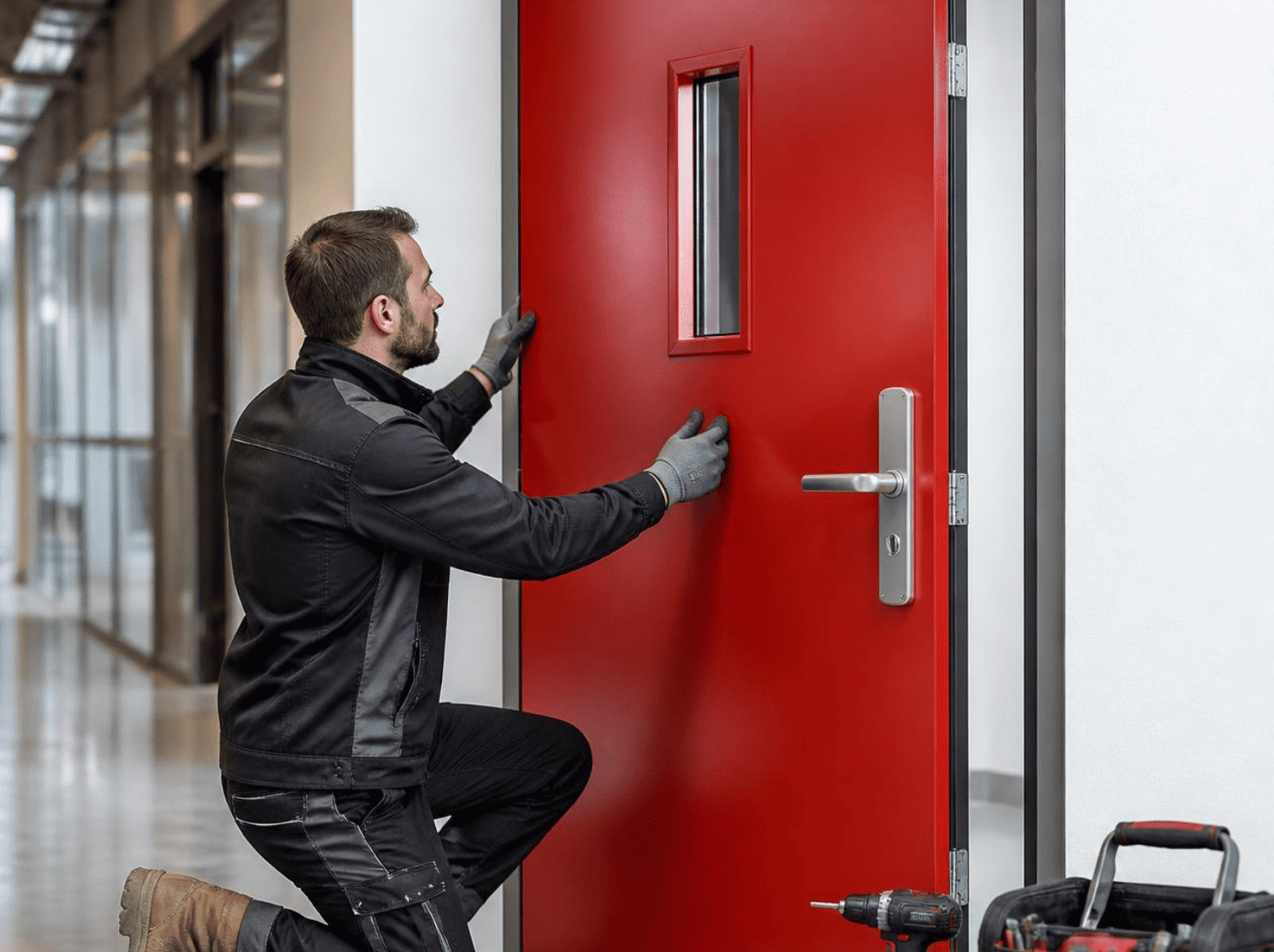
Proper fire door installation helps safeguard your property from the rapid spread of fire and smoke. Whether you are planning to install new fire doors or refit existing fire doors, professional installation helps ensure the work is carried out correctly. A fire door acts as a barrier to slow down the spread of fire and smoke, helping people evacuate the building safely. For businesses in London, choosing a suitable fire door involves more than selecting a fire-rated door. The door, frame, seals, hinges, closer, and other hardware must work together as a complete doorset.
The required specification should be based on the building’s fire risk assessment, fire strategy, and applicable Building Regulations. The Regulatory Reform (Fire Safety) Order 2005 places duties on the responsible person to manage fire safety in non-domestic premises.
What Are the Fire Door Requirements for Commercial Buildings?
Commercial buildings can have fire doors in several important locations, including:
- Protected escape routes
- Stairways and corridors
- Plant and electrical rooms
- Storage areas
- Kitchens
- Areas separating different fire compartments
- Doorways where a fire risk assessment identifies a need for fire resistance
The exact requirements vary according to the building type, layout, and level of risk. Approved Document B provides statutory guidance on fire safety in buildings in England. Its Volume 2 covers buildings other than dwellings. A fire risk assessment should identify where fire-resisting doors are required and the appropriate level of protection.
Fire Ratings FD30 or FD60?
One of the first questions buyers ask is which fire rating they need. An FD30 fire door is designed to provide 30 minutes of fire resistance under the relevant test conditions, while an FD60 fire door is designed to provide 60 minutes.
However, the correct rating should not be selected based only on price or on what another building uses. The required rating depends on the fire strategy and the location of the door. For example, a plant room may have different requirements from an ordinary office corridor.
The door should also be treated as a complete assembly. London Fire Brigade highlights the importance of compatible components, including hinges, seals, handles, and glazing.
What Does Proper Fire Door Installation Involve?
Correct fitting is just as important as choosing the right product. A professional installation should consider the following components and requirements:
- Door leaf and frame compatibility
- Correct operating gaps
- Intumescent and smoke seals
- Suitable hinges
- Appropriate locks and latches
- Door closers where required
- Fire-rated glazing where specified
- Correct fixings
- Door signage where required
- The surrounding wall and frame junction
The door must close correctly and provide the performance expected from the tested system. GOV.UK guidance also stresses that fire doors must be kept in good working order and repaired or replaced by a competent person where necessary.
Why Choose a Certified Fire Door Installer?
Commercial property owners should look beyond the price of the door itself. A competent installer should understand how the complete doorset is specified and fitted. They should also be able to provide appropriate evidence of the work completed.
Before appointing an installer, ask the following questions:
- Who will carry out the installation?
- What experience do they have with commercial buildings?
- Can they explain the proposed fire rating?
- Are the door and its components compatible?
- What installation standards or manufacturer instructions will be followed?
- What documentation will be provided after completion?
- Does the quotation include removing old doors and making good?
Using a certified fire door installer can give commercial buyers greater confidence that the work is being handled by someone with appropriate knowledge and competence. London Fire Brigade also advises property owners and managers to use accredited professionals and check the test certification of fire doors.
What Should You Expect From Commercial Fire Door Installation?
A commercial project usually requires more planning than replacing a single door. The process typically involves the following stages.
1. Site Survey
The installer will inspect the openings, frames, and existing doors. They may also assess access requirements and the intended use of the doors and associated hardware.
2. Specification
The appropriate fire rating and doorset specification are determined according to the building’s fire safety requirements rather than simply selecting the cheapest option.
3. Removal and Preparation
The existing door and unsuitable components may need to be removed. The opening and frame are checked before the new doorset is fitted.
4. Installation
The door and associated components are installed according to the relevant product information and installation requirements.
5. Final Checks
The completed door should be checked for correct operation, closing, seals, gaps, and hardware.
6. Handover
Keep installation records, product information, and other relevant documentation with the building’s fire safety records.
How Much Does Fire Door Installation Cost in London?
The fire door installation cost depends on the specification and condition of the building. There is no single price that applies to every commercial property.
London market guides indicate that the cost of a supplied-and-fitted FD30 doorset can range from a few hundred pounds per door, while FD60 and specialist doors can cost considerably more. Larger projects may also have different per-door rates. Actual prices depend on the specification and site conditions.
The main factors affecting the price include:
- Fire rating
- Door and frame size
- Existing frame condition
- Door material and finish
- Fire-rated glazing
- Hinges, locks, and closers
- Access restrictions
- Out-of-hours work
- Removal and disposal
- Number of doors
- Required documentation
- Any remedial work to the surrounding opening
For this reason, businesses should request a detailed quotation rather than relying on a generic price per door. A further consideration when calculating fire door installation cost is whether an existing door can be repaired or upgraded. Replacement is not automatically required in every situation. The existing doorset must be assessed for its condition and suitability.
Fire Door Installation London What Should Businesses Check?
When arranging fire door installation London services, property managers should request a site assessment before agreeing to the work. This is particularly important in older London buildings. Existing openings may be unusual, access can be restricted, and occupied premises may require work to be completed in phases.
A good quotation should clearly state:
- Number of doors
- Fire rating
- Door and frame specification
- Hardware included
- Labour costs
- Removal of existing doors
- Making good
- Certification or handover documentation
- VAT and any additional charges
This makes it easier to compare quotations fairly and understand exactly what is included.
Do Commercial Fire Doors Need Regular Checks?
Yes. Installing a fire door is not the end of the responsibility. Fire doors can become damaged through everyday use. Hinges can loosen, seals can deteriorate, and closers can become poorly adjusted. Doors can also be wedged open or altered after installation.
The responsible person must manage fire safety and keep relevant fire precautions properly maintained. For certain multi-occupied residential buildings over 11 metres in height, the Fire Safety (England) Regulations 2022 also introduce specific routine fire-door checks. These requirements are distinct from the general fire safety duties applying to commercial premises.
Final Thoughts
Fire doors should be treated as part of the building’s wider fire safety strategy. The correct rating, compatible components, and quality installation all matter. If you are arranging fire door installation London, start with a proper assessment and a clear specification. Griol Fire Protection helps building owners plan fire door installation projects with a focus on suitable specifications, quality workmanship, and the needs of the building.
Frequently Asked Questions
1. How Much Does a Fire Door Cost to Install in London?
The fire door installation cost varies according to the fire rating, doorset, frame, hardware, site conditions, and amount of preparation required. A detailed site survey is the best way to obtain an accurate commercial quotation. Prices can vary significantly between FD30, FD60, and specialist installations.
2. Do I Need an FD30 or FD60 Fire Door?
This depends on the location and fire safety requirements of the building. FD30 doors are designed to provide 30 minutes of fire resistance, whereas FD60 doors are designed to provide 60 minutes under the relevant test conditions. The required specification should be based on the relevant fire strategy, risk assessment, and applicable guidance.
3. Can an Existing Commercial Fire Door Be Repaired Instead of Replaced?
Sometimes. An existing door may be repairable if the door leaf, frame, and components remain suitable. However, damaged or unsuitable doors may need to be replaced following an appropriate assessment.
4. What Should I Look for When Hiring a Fire Door Installer?
Look for relevant experience, competence, and appropriate product knowledge. A certified fire door installer should be able to explain the proposed doorset, fire rating, and components rather than quoting only for the door leaf.
5. How Long Does Commercial Fire Door Installation Take?
Installation time varies depending on the number of doors, site conditions, and complexity of the project. A single-door installation may be completed relatively quickly, while larger commercial projects can take longer because of surveys, access restrictions, and phased installation. Ask the installer for a project-specific timeframe.