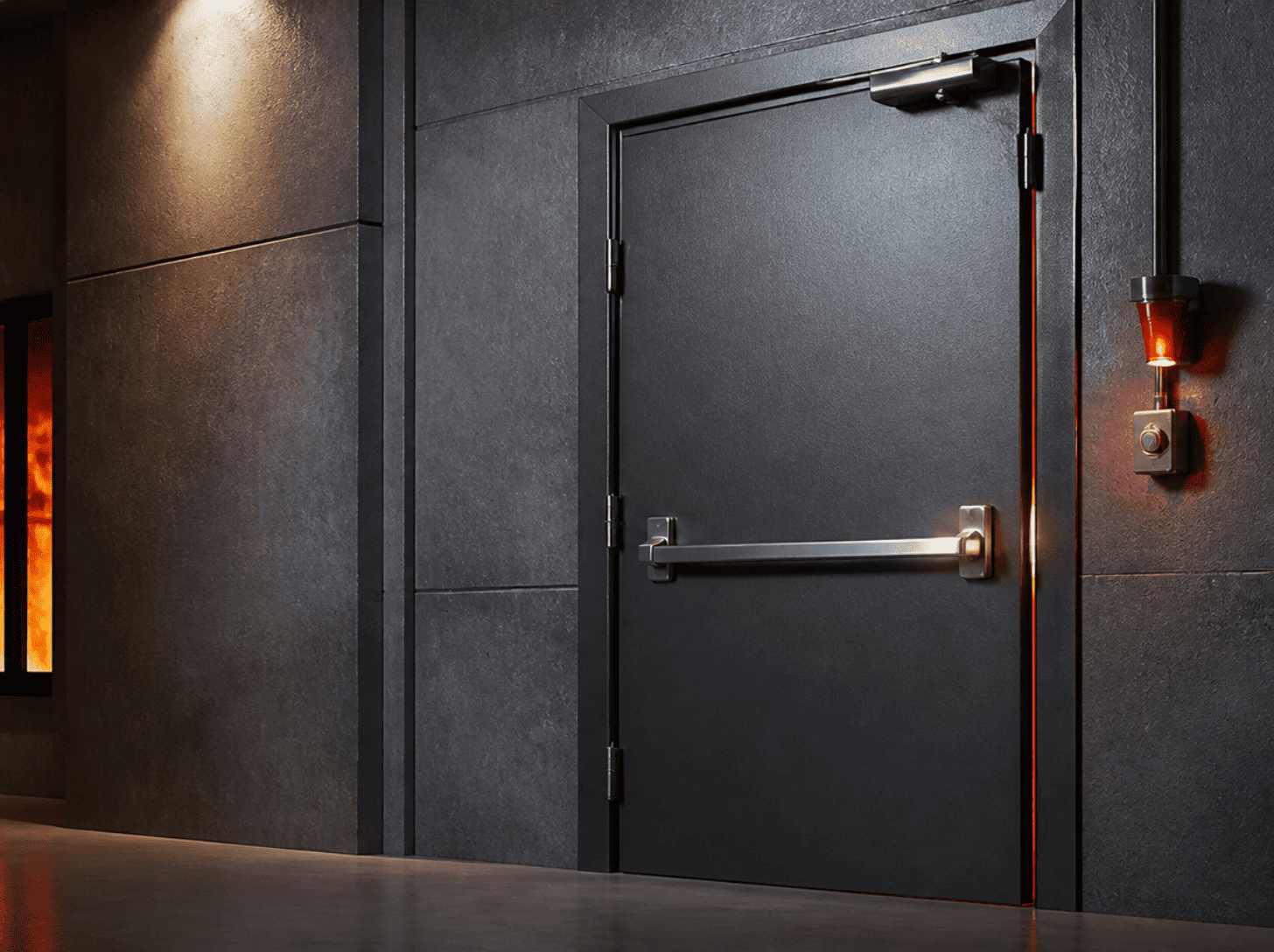
Fireproof door help slow the spread of fire and smoke inside a building. They form part of passive fire protection. In practice, no door is fireproof forever. A tested doorset is designed to resist fire for a stated period under specific test conditions. Its effectiveness depends on the door and frame being suitable for their location and maintained in good working order. A fire strategy and fire risk assessment should guide the choice.
How Do Fireproof Door Improve Building Fire Safety?
Fireproof door help divide a building into areas that restrict the spread of fire and smoke. This separation can support safe evacuation and help firefighters reach the affected area.
- Slowing fire spread: Closed fire doorsets can help delay fire spreading into adjacent spaces.
- Restricting smoke spread: Suitable smoke seals help limit smoke passing through door gaps.
- Protecting escape routes: Appropriate fire doors can help keep corridors and stair enclosures safer for evacuation.
Fire doors work alongside alarms and emergency lighting as part of a building’s wider fire protection measures. London Fire Brigade explains how compatible components help fire doors slow the spread of fire and smoke.
What Makes Fire Safety Door Effective?
Fire door performance depends on the complete doorset. The door leaf must be compatible with its frame. Hinges and latches must suit the tested specification, and a door closer should shut the door fully where required. Smoke seals help limit smoke movement, while glazing and other hardware must also be suitable for the doorset.
A complete specification may include:
- A compatible door leaf and frame
- Suitable hinges and approved fixings
- A latch that allows reliable closing
- A door closer where required by the design
- Intumescent seals and smoke seals
- Fire-resisting glazing where specified
- A surrounding wall that provides the required fire separation
The door’s location also matters. Fire doors may protect stairways and corridors, separate fire compartments, or protect rooms with specific fire risks. These examples are not universal requirements. The fire risk assessment and applicable design guidance should determine the location and rating of each door.
What Should Buyers Check Before Fire Door Installation?
Check the specification before approving the work. The building’s fire strategy and the condition of the existing opening should be assessed to determine the appropriate door and installation requirements.
- Confirm that the correct fire rating has been specified for each opening.
- Check whether the quotation includes a complete doorset or only the door leaf.
- Confirm that the frame and hardware comply with the relevant tested specification.
- Ask who will carry out the work and what experience they have.
- Check whether removing the existing door and preparing the opening are included in the price.
- Request installation records and product information for the building’s fire safety records.
FD30 and FD60 are common fire door ratings. They refer to 30 minutes and 60 minutes of fire resistance respectively under specified test conditions. They do not guarantee identical protection in every fire. The appropriate rating should be determined by the building’s fire strategy and risk assessment.
London Fire Brigade’s fire door guidance highlights the importance of using compatible components that work together as a complete system.
When Should a Building Manager Book a Fire Door Inspection?
Building managers should establish inspection arrangements based on the building’s use, condition, and level of risk. Inspections should look for doors that fail to close fully, damage to the door leaf or frame, missing seals, loose hinges, and other defects. Wedges and obstructions can prevent a fire door from protecting an opening effectively.
The applicable requirements depend on the building type and location. In England, the Fire Safety (England) Regulations 2022 require checks at least every three months for communal fire doors and at least every 12 months for flat entrance doors in residential buildings with more than one home and a top storey above 11 metres.
These intervals do not establish a single inspection schedule for every workplace. The responsible person should follow the fire risk assessment and the legal duties applicable to the premises.
Read the GOV.UK guidance on fire door checks for further information about the scope of these residential requirements.
How Does Fire Door Maintenance Protect Performance?
Everyday use can cause wear to door hardware and damage to seals. A door may also become difficult to close correctly if its closer or frame is damaged or altered. Regular maintenance helps keep the complete doorset functioning as intended.
A proper fire door maintenance procedure should include:
- Checking whether doors close and latch correctly.
- Inspecting the door leaf and frame for damage.
- Checking hinges, intumescent seals, and smoke seals.
- Removing obstructions that prevent the door from closing.
- Recording defects and arranging appropriate repairs.
Staff should not cut, alter, or replace door components without confirming that the work complies with the manufacturer’s instructions and the doorset’s tested specification. Unapproved changes can compromise fire performance. The person responsible for fire safety should maintain records of inspections and corrective actions.
Final Thoughts
Fireproof door support building safety when their specification suits the location and the complete doorset performs as designed. The building’s fire strategy should determine the required fire ratings and door locations. Regular inspections and appropriate maintenance help identify problems before they compromise performance. Griol Fire Protection supports building owners in London with practical fire door services. Its team can advise on fire door installation, inspections, and ongoing maintenance.
Contact Griol Fire Protection to discuss your building’s requirements and planned fire door work.
Frequently Asked Questions
What Should a Quote for Fire Door Installation Include?
A clear quotation should specify the fire rating and complete doorset requirements. It should state whether the price includes hardware, removal of existing doors, opening preparation, installation, and handover records. Any additional building work should also be identified.
How Often Should a Fire Door Inspection Take Place?
The inspection schedule depends on the building type, applicable regulations, and associated risks. Specific inspection intervals apply to certain residential buildings in England. Other premises should follow the relevant fire risk assessment and applicable legal duties.
What Does Fire Door Maintenance Usually Cover?
Fire door maintenance can include checking the condition of the door leaf and frame, hinges, seals, latches, and closing mechanism. The service provider should record defects and identify any repairs requiring specialist attention.
Do Fire Safety Doors Need to Stay Closed?
Fire doors should close fully when required by the building’s fire safety arrangements. Suitable approved hold-open devices may be used where permitted by the design and should release the door when the fire alarm activates. Wedges and other unauthorised objects should not be used to hold fire doors open.
Can an Existing Fire Door Be Repaired Instead of Replaced?
Sometimes. A competent specialist should assess the door leaf, frame, and associated components before recommending work. Repair may be appropriate if the existing doorset remains suitable for its location and the repair can restore its required performance. Severe damage or an unsuitable specification may require replacement.